Wednesday, October 24, 2012

Gluten Free Recipe!

This isn't something that I do often (ever), but today I thought that I would share with you a recipe I tried recently! I usually find these kinds of posts a little cheesy, but I think that this one will be different.


In keeping with all the latest trends, this is a gluten free recipe that I made for a friends barbecue this past weekend. Everyone seemed to enjoy it, so hopefully you will too!

THE MEAT LOG

I'll start off with the ingredients list:
- 2 pounds of uncured nitrite free bacon
- 2 pounds of 80/20 ground beef (I opted to be a little cheap and not use grass-fed. Shhhhhhh.)
- Cheese (as much as you see fit). I used Boar's Head 3-pepper Colby Jack.
- Jar of jalapenos. Use fresh if you want. 
- Barbecue Sauce. I used Stubb's.


First, take some of your bacon and cut it up into little pieces. Fry it up and feel free to snack. Take 12-14 slices of the un-cooked bacon and create a latticework of bacon-y goodness. I'm not going to go into full details about how to create this weave: put on your big boy/girl pants and figure it out!

Fuck. Yes.
Next, take your ground meat and season it as you see fit. Salt, pepper, maybe some garlic or something. Go nuts. Smush the meat out so that it forms a thin layer that is just about the same size as your bacon weave.


Now that your meat-mat is done, it's time to cheese that son'bitch up. Use whatever kind of cheese you like, but in my first attempt at this I found that grated cheese just wasn't cheesy enough. I went with a spicy cheese and I don't regret my decision.


Now it's time to add your accoutrements. (I know you like that word.) My first attempt at this recipe used Hillshire Farms Lit'l Smokies and it came out just too salty. This time around I used jalapeno slices and took that cooked bacon from earlier and dumped it on there. This is where the recipe becomes an art, not a science. Put whatever sounds good to you on at this point: pepperoni, bacon, pancetta, canadian bacon, scallops, tater tots, onions and peppers, avocado (mmm, maybe not), pulled pork or mozzarella sticks. You could also put some of that BBQ sauce on now; but I forgot to do it. Go nuts!


The next part is the trickiest part of the whole situation: rolling your meat. The ground beef will stick to the bacon a little, so you may consider spraying the bacon with cooking spray before you lay down your meat-mat. Start at one end and just roll it up. Try to keep your goodies in their as much as possible so you get a nice layered effect. Presentation counts! Keep the meat-roll as tight as possible so the cheesy delightfulness on the inside stays there. 

Not my meat. I forgot to take a picture of this step. Shit.
Once your meat-roll is nice and tight, grab ahold of your bacon lattice and roll back the other way; gently enveloping your meat-roll in a heavenly shroud of bacon-y happiness.


Now it's time to cook. Feel free to let your Meat Log rest for a while in the fridge to help compact the meatiness. I've now cooked this both on a grill and in an oven, and I personally prefer the grill. Something as phallic as a log of meat should be cooked outside on fire. While drinking beer and throwing a football. And throwing logs over fences. 

Get your grill good and hot and drop that sucker on. I cooked it on a layer of tin foil for a while, and then finished it off just on the bar grill. This allowed the bacon to get crispy without getting burned to shit. If your meat log is good and girthy (as it should be), then it's going to take a while to cook. True art can't be rushed (remind all the civilians about this fact). Occasionally open up the grill and baste your masterpiece with the rest of that BBQ sauce. Don't be stingy either.

Smells like Success!
Once it's done, slice this bad boy up and eat it however you please. Rumor has it that it'd be amazing on a biscuit, but we ate it as is. With our hands. And no shirts on. Enjoy!

There you have it, my gluten free masterpiece that will be perfect for all of you health conscious dieters out there! Remember: cholesterol turns into testosterone!

Have a great day and go lift something heavy!


Tuesday, October 23, 2012

Trainer Life

I'm sure most people sit at home and think "Man, personal trainers and strength coaches have a great life". We sure do, given what a glamorous profession we work in.


Well, being a trainer or a coach does come with some pretty significant lifestyle changes. Living outside the normal 9-5 takes a lot of getting used to: we work when you don't.

Our hours are completely backwards from yours. Most trainers and coaches start training at 5 or 6 in the morning. This is so that we can get a few sessions in before everyone else has to go to work. The morning block of sessions usually goes from 5 or 6 until 11 or 12. The last few sessions of the morning are retiree's, moms or people who work from home.

The evening block of sessions usually goes from 4 until 8 or 9. This is the after-work crowd and these are usually the most popular spots. A trainer with a very packed schedule can pretty easily see 8-10 clients in a day.

What happens in the middle of the day? Those are our off hours. Thats actually when most trainers or coaches find the time to get their workout in. This is one of the big benefits; if your co-workers or friends who are trainers have the same time off in the middle of the day as you, it gives you the opportunity to train with some great partners. The Trainer Life schedule has given me and some friends the opportunity to get together on Friday afternoons to get in a great lifting session at CrossFit Resilience for the last couple of weeks.


Some trainers end up with other schedules and end up with days where you don't have to be at work till noon. These lucky bastards get to work late the night before and then actually get a full night of sleep. The difficult task is then finding ways to be productive the next morning rather than just sleeping the day away. Usually these people would run some errands and then catch a workout.

When you spend 8-10 hours a day being "on" with clients, it makes you really crave alone time. I think it's important for trainers and coaches to take the opportunity for some Me time; just a time to relax and be quiet and not talk to anyone.

The schedule is tough. It doesn't leave a lot of time for other things; definitely something to think about for anyone considering a career change into the fitness industry. If you love it like I love it, though, it's all worth it.

Have a great day, and go lift something heavy!

Thursday, October 18, 2012

Improving Athleticism: Deceleration

People are always looking for ways to get faster. Coaches are always advertising their secrets to get you faster and more explosive. Is this really what you need to become more athletic though?


The real game changer, when it comes to sport-speed isn't how fast you can accelerate, but how fast you can decelerate. For team-sport athletes, there is nothing linear about what they do. Games are dynamic and you are very rarely running in a straight line with nothing impeding your progress. So why deceleration important?

Deceleration (or "breaking down") is what allows you to make cuts or to stop (duh). Straight line speed is great, but you will eventually need to go somewhere else. If you can decelerate and change directions faster than the next guy, you're going to be a better athlete. This is like a wide-receiver running a route. The corner back who is playing defense on him is going to be just as fast as he is. But if that WR can stop on a dime, change directions and go full speed before the defense, he'll be open and will have an opportunity for a catch.

How can you work on improving deceleration? Here are some great drills.

Heidens (or skater hops) are a fantastic lateral movement drill. The idea is simple: start on one leg, explosively jump to the next and athletically stick the landing. Without putting your other foot down, jump back to where you started. This drill will help improve several things: proprioception, single leg stability and power-development.


The most common drill to teach someone how to decelerate properly is the Depth Drop. It's a more advanced variation on the box jump, because rather than avoid the eccentric stress of landing (as in the box jump) you are actually only training the eccentric portion. Make sure the athlete lands athletically, and with your female athletes make sure they stick the landing with their knees OUT.


A nice progression of the depth drop is the 180 Depth Drop. Start off facing backwards, so that when you land you have to resist the rotary forces you've produced.


Depth Drop Lunges are a really cool drill I picked up from Mike Ranfone a while back. Start off on a medium-height box facing sideways, drop off the box and stick the landing in a lunge position. This drill is going to teach you to absorb your body weight in a pretty athletic position.


These are just a few of my favorite drills to help teach people how to get fast and explosive. Try some of them out and let me know how it goes! Have a great day and go lift something heavy!

Friday, October 12, 2012

Check Me Out!

Who's got two thumbs and was recently featured on a very popular and well-respected strength and conditioning blog?


THIS GUY!!

I was recently in contact with Tony Gentilcore about doing some guest posts for him, and the first two went up in the last two weeks! If you haven't had a chance to check them out, here are the links:


If you like them, let either Tony or I know! There should be more to come in the future. Also, if anyone has any topics they'd like for me to cover, then let's hear them!

I'm going to be travelling to Mexico for a few days for a wedding so the site will be low on content for most of next week, but hopefully I'll have some time to do some writing while I'm down there. 

Have a great day and go lift something heavy!

Thursday, October 11, 2012

Self-Rewards

The concept of self-rewards is nothing new; people have been doing it for ages and it manifests itself in many forms. You did something good so now it's time to treat yourself.


You got a promotion at work; so you go on vacation.

You made it through exam week; so you go get blackout drunk on Friday.

You had a really good training session; so you go crush a cheat meal. 

Well, great. You did a good job. That's awesome and I'm really happy for you. But why does everyone have this underlying need for a reward?

Since we were little kids we were given performance-based rewards. It's one of the ways we learn: positive and negative-reinforcement. You pee in the potty, you get a lollipop. You do your homework, you get a gold star. Mow the lawn, you get five bucks. Throw a chunk of ice at your sisters head causing her to bleed, and you pay the consequences (Sorry about that; I love you.)

Works great with kids; but why do we need to do that as adults? Why can't the result of your hard work be the reward?

I hear this all the time regarding workouts and food. People post on Facebook about how they just "crushed a gym sesh" (i.e. 45 minutes of cardio and then some biceps blasting) so now it's time to head home and reward themselves with a pint of Ben and Jerry's.

You know what the pay-off of a good workout is? Doing it again the next day. And the day after that. The results of days and weeks and months of breaking your balls in the gym is the pay-off. Losing the weight, gaining the muscle, or being ready for your sport is the pay-off.

Thank You, LBEB.
I hear training clients do this all the time, too. "Well that was a great workout, I'm going to stop and get some froyo as a reward." Well, you did do a great job and I am very proud of you, however, your reward should be more training. Your reward should be going home and crushing a high-protein/high-carb meal, adapting to the training stress and coming back the next day stronger than before. Not fucking froyo

Even worse is when someone completes a great few weeks/months of training, see's results and then says "Oh, it's time to take a few weeks off; I earned it!" 

No, you didn't. You did something you should be doing for your health and your life. You didn't train for and complete a marathon or a powerlifting event. Even those athletes don't take a few WEEKS off, they take one week off and then get back on the grind. 

Here's the harsh reality: you didn't do anything special. You are not a unique and beautiful snowflake. You should be working out and training because you need to be healthy and strong. Your wife shouldn't make you do it. Not your doctor or trainer, either. You should be doing it because you know it's the right thing to do! Stop rewarding yourself, the reward is in the effort itself. 


Have a great day. Go lift some heavy shit!


Wednesday, October 10, 2012

Exercises You Should Be Doing

I know that everyone has an "Exercises You Should Be Doing" post, and there's a good reason for that; we know more than you do! There are a ton of great exercises floating around out there that Average Joe's just don't know about. Too, there are exercises out there that coach's forget about; we get into a routine with certain exercises and forget about others. This is one of those exercises.


If that picture alone doesn't sell you on this exercise, I don't know what will. Look at that guys' tree trunk legs, his girthy glutes, the thick spinal erectors and the huge upper back; all with 405 on the bar. Guy is a monster.

The exercise is the snatch high pull. It's usually used as a training exercise for the snatch, but I've found it has a lot of efficacy as a stand-alone exercise. Take a look:


So why should you be doing this exercise? It's a precursor to the snatch; which is an amazing lift. This requires you to be explosive, but doesn't require the technique of the snatch. While the full snatch is amazing, the benefits of the catch are (I think) lost on many people. While you should be working on the mobility and technique to catch a full snatch, this will work in the meantime. The wide grip forces you to engage your upper back quite a bit. It's a deadlift, with a jump, and a big shrug at the top. I don't see where you could go wrong.

Incorporating this lift into the beginning of your workout once or twice a week will help you get strong, get fast and build the big back you've been looking for. I'll leave you with a video of my shitty snatch high pulls from the other day.

Have a great day, and go lift something heavy!


Tuesday, October 9, 2012

Improving Athleticism: Box Jumps

The box jump is one of the most common exercises to see in any weight room in the country. Go into a big-box commercial gym, a college strength room or a personal training studio and you'll surely find people doing box jumps. But, do they know why they are doing them? And are they even doing them correctly?


You see people doing box jumps for a variety of reasons. In an athletic setting they are done as a power production exercise; in a CrossFit gym they are often done in a metabolic conditioning circuit; in commercial gyms they are done for...well, who knows why.

Why are YOU doing box jumps? The intent of the exercise is really as a power-production exercise. You're creating a situation where the athlete can jump as explosively as possible without having to worry about the stress from the landing. The eccentric portion of any exercise is where all the stress lays; so if we can take that out the athlete can perform that exercise with greater volume and intensity. It's also a great way to get athletes doing something athletic early in their pre-season programs.

Let's go over proper and improper form, as well as some useful variations.

The goal of the box jump is not to jump on the highest box that you can physically get on to. If you watch someone do a super-high box jump, all they are really doing is expressing their hip mobility. Sure, they still have some boost; but watch their hips as they get to the box. They end up with their knees up by their ears: not an athletic position.


Sure, it's impressive. I mean, I don't know if I can do that. But it's not a box jump. His knees come way up and he can't even control his landing. Plus, he took an approach which turns it into a different exercise.

A proper box jump should begin and end in the athletic position. Your goal is to jump as high as you can and just land on the box. Be explosive and think about trying to jump over the box, not just onto it. Also, make sure you step down off of the box for every rep. The box is there to allow you to avoid the eccentric stress of a jump; jumping off the box after a rep negates the point of the exercise. The eccentric portion can be explored with other exercises at the right point in the cycle.


Once an athlete gets really explosive, there are other variations to try rather than just using a higher box. That just allows the athlete to express how high he can jump, rather than making the exercise harder. For your first variation, let's take away the countermovement to the jump. For the concentric-only box jump, start off by sitting on a shorter object (a low box, some plates or even a dynamax ball).


Using a weight vest will allow the athlete to move with their normal mechanics, but they will be jumping with an added number of pounds.


Providing the athlete with (light) dumbbells to hold with alter their mechanics by not letting them use their arms to swing into the jump, but they will still be able to get the countermovement from their legs. This is an awkward movement for a lot of athletes so make sure you start with a lower box.


The last variation I'll go over is the 180-degree box jump. This particular variant is a good way to help improve proprioception in an athlete while simultaneously de-loading them. (Because of the awkward nature of the exercise, you'll use a lower box and probably won't need to add any external resistance).


I hope you enjoyed the post. I'll soon be going over more ways you can help improve your athleticism. Have a great day and go lift something heavy!


Wednesday, October 3, 2012

Programming 101

There are a ton of trainers/coaches in this industry. There are a ton of smart people who are strong and can relate well to their clients. What really sets someone apart from their peers in this industry, however, is their ability to write an effective program.

Ineffective
Writing a great strength and conditioning program is an art, not a science. You can't simply tell someone the right formula and suddenly they are capable of doing it. It takes lots of time spent reading other programs, understanding what the coaches objective is and writing your own programs.

I read every program I can get my hands on. I read Show and Go a couple of times. I read Todd Bumgardners recent 12-deadlift program (I'd love to read the program Mike Ranfone just wrote for Todd too). 5/3/1, Juggernaut, Smolov, Westside, Vertical Jump Bible; I read them all. As I read I ask myself "Why is the coach using this exercise? This rep scheme? What adaptation is he going after?"

I can then, hopefully, turn around and use that information when I write a program. I've written a ton of programs. Some have been scratched into a sheet of paper and handed off; most are kept on my laptop. I have a folder full of dozens of programs that I've written for different friends and clients. They range anywhere from 2 days a week to 5 days a week and from a 4 week program to a 4 month program. Out of these several dozen programs I've written, maybe 10 total have been executed to completion. This, frankly, sucks the Big D. I could have written the best program in the world, but I'll never know if someone doesn't complete it. The ones that have been finished have all had pretty good results so far; 20-30 pounds of weight loss and tons of strength gains. I've got a few programs out right now that I know will get finished, so I'm excited to see the results.


Programming Jedi Masters like Eric Cressey, Tony Gentilcore, Mike Robertson, Rudy Nielsen and Dean Somerset could teach you a lot more about programming than I can, but I still have some tidbits to share with you.

1) Know who you are writing for. This is the biggest lesson I've learned. Like I said before, you can write the best program in the world but if no one finishes it then it's not worth shit. I've written a lot of good programs for people that I should've known would never complete it. Be honest with yourself; if theres not a chance in hell that they will lift 4 days per week, then don't write a 4 day program. A two-day program executed perfectly is worth more than a four-day program performed half-assed.

2) Get all the info you can. Especially when you write for friends or for e-clients, you need to know everything you can. I don't mean health history and movement dysfunctions, though. I'm talking about how long they can spend at the gym and what kind of equipment they have available. Programming safety squat bar good mornings doesn't do any good if theres no safety squat bar. Prowler pushes are amazing conditioning, but it doesn't work if they don't have access to a Prowler. If you write a workout that takes 90 minutes, but your trainee can only spend 45 minutes in the gym, you won't get the results. Make sure the client has access to all of the equipment necessary, or else don't use those exercises.

3) Understand the person. Cluster sets may be an amazing way to get strong, but if the person you're writing for doesn't have the mental strength to get through a set of those then it won't do them any good. A 10x10 workout of squats/chinups may be an amazing way to build hypertrophy, but if your client is going to bail after set 5 then it doesn't work. Use techniques that the client will actually be capable of performing, and you'll get better results.

4) Make it enjoyable. As trainers, we may know that the stuff that is best for you is usually uncomfortable and unpleasant. Unfortunately when most people are faced with the prospect of doing something really unpleasant, they are going to skip it. Front squats with a 5 second eccentric and a pause at the bottom may be really good for you, but they are also really brutal. A lot of gen-pop people will end up skipping the tempo and doing something different, which may not achieve the adaptation you desire. If you try to make the program enjoyable (or at least not totally miserable) the trainee will have a higher chance of actually doing all the work you want them to do.


Have a great day, and go lift some heavy shit!

Friday, September 21, 2012

Gym Etiquette

I spend most of my day in a gym. Whether it's in a commercial facility or in a collegiate weight room, I see it all. There are some do's and don'ts that everybody should know before entering a gym, and I think its high time that I go over some of those here.


1) Put your shit back where you got it - This one should be self-explanatory. If you took a barbell off of a rack to use it, put it the fuck back where it came from. The gym clearly left it there for a reason (squats, presses). Also, take a look at the dumbbells; they all have numbers on the ends. These go in ascending order, usually in 5 pound increments. Since you're lifting weights, I'll assume you can count which means you sure as shit better put the DB's back on the rack in the right order. "5, 10, 15, 65, 20" does not make any damn sense.

2) Don't be a dick - Ok, I get it. You have a lot of sets of benching to do (it is Monday, after all) but don't be pissed at 6 p.m. when someone asks if they can work in with you. Most people won't have the time to wait for you to finish 12 sets of presses so they can get in their quick 5x5. By the same note, if you're using the cable-crossover to do your flys, or double bi's or whatever, don't be surprised when someone asks if they can sneak in and use the pull-up bar.

3) Don't be a dick - If you need to sneak into the squat rack while someone has 345 on the bar so you can squat 155 and change the bar height, dont do it. Just wait.

4) Nobody cares - This one goes both ways. Ladies, seriously, guys aren't looking at you. I know that Healthworks built their business on the basis that guys are leering and drooling at women in the gym, but it doesn't happen. On the other hand guys, theres no girl in the gym who really gives a rats-ass if you can curl 25 pounds for 30 reps. You know who cares about that? Other dudes. If you want to attract the attention of other dudes, grunt and groan your way through your set. If you want to get a chick to notice you, go to yoga and try to do yoga.

5) Don't be a Chatty Cathy - It's cool to know other people where you lift; it's part of the fun of training. You go lift at the same time every day and see familiar faces. You chat about the (shitty) Pats game or your line of work. Keep it simple. Chit chat is fine, but don't take away from my workout. Once you detract from my workout, you become a dick.


6) Don't be a know it all - One of the nice things about being in a weight room is that you know the people around you are at least somewhat interested in something you're interested in. If you know a lot, thats great. But don't impress it upon someone who doesn't give a shit. It's one thing to say "hey, try and keep your elbows in on your bench" and it's another to dive into why they should be doing a Periodized High Volume German Concentric-only Dynamic Effort program. You know what? Sometimes people are there just to lift a few weights and go home.

7) Ask for help - If you have a question, ask one of the trainers or one of the other people who seem to have a handle on what they are doing. There's no such thing as a stupid question, only a stupid person for not asking.

8) Don't slam your weights - No matter how hard you drop them, 30 pound dumbbells aren't going to sound like 70's. Drop weights during Olympic Lifts and such; there's really very little reason to drop weights during biceps curls.

9) Leave your cell phone in the locker - Gym rules always state "no cell phone use". The reason is because every phone has a camera now and they run the risk of some invasion of privacy issues if you start filming the old guy on the upright bike who's nuts are hanging out of his shorts. The better reason? Because if you can't leave your phone in the locker for 60 minutes while you lift, you're a douche. Turn yourself off for a while! De-stress! Forget about everything else for a while and move some weights, dammit!

10) Just don't do it - For fuck's sake, DON'T CURL IN THE SQUAT RACK. Unless you can do a barbell curl with more than I can squat, don't fucking do it. It's a surefire way to get kicked in the babymaker.


These are just the basic gym commandments. It really comes down to common sense, but we all know how few people have that.

Go lift some heavy shit today!

Thursday, September 20, 2012

Times, they are a'chaging

I've been working at the same gym since the day that it opened it's doors: going onto 5 years at this point. I started off as a front desk employee and made the shift to (epic) trainer. Over the course of this time I've seen quite a few employee's come and go. Some were friends and some I wouldn't recognize on the street anymore.


This is pretty standard fare for a commercial fitness facility; the turn-over for employees tends to be pretty high. However, we just had our biggest shift since we opened.

It really started in June when Justin and Jen left. Then in July Dan left. Then Chris and Drew in August. Now in September Kristen and Kelsi are leaving. What is so special about these people?

Jen - Level 2 CrossFit coach with several years of coaching under her belt; attending PT School.
Justin - BS in Exercise Science. NSCA CSCS with several years of coaching both athletes and general population; great knowledge of functional anatomy.
Dan A. - BS in Exercise Science. NSCA CSCS, BIOSIG 1, CrossFit Level 1 coach with a ton of experience as a power lifter, high level athlete and aspiring strongman. His level of attention to nutrition is ridiculous.
Dan M. - BS in Physical Education and Exercise Science. NSCA CSCS. Worked with the Chicago Cubs organization for a bit.
Chris - NSCA CSCS and a DPT. One of the few marathoners (he's run 4) who understands the importance of strength training.
Drew - BS in Exercise Science, DPT. Great functional anatomy and capable of working with rehab or healthy populations.
Kristen - Our full-time front desk employee. Spent years as a therapist and is pursuing her (second) masters in (probably) Nutrition. Understands how food quality can make a huge impact on your daily life.
Kelsi - Our babysitter. A former D1 distance runner, she still competes in races. She has also recently found a love for weight training (squatted 155x5 after 8 weeks of training) and just got certified as a personal trainer.

What's so special about this group? Absolutely everything. For about a year almost all of our trainers had an educational background in Exercise Science. Even the ones that didn't were moving forward in their education with related fields. Everybody lived and loved "The Life". We often trained together, and pushed each other to get better. Our love for lifting heavy and eating cleanly created an environment in the workplace so viral that all of the other employees caught on with it too. Even our babysitter was a savage!


The culture at the gym was one built around the desire to improve and the need to keep learning. We constantly talked shopped: Did you read this yet? What do you think about this technique? I'm having trouble getting so-and-so to do this, any ideas? We all learned from each other and supported each other because we understood each other; we all lived the same lives. Nobody thought it was weird that someone was eating 12 oz of beef for breakfast. We had to make room in the fridge for everyones hard boiled eggs. Bagels were something to be shunned. We shared a disdain for soy and gluten and a common love for bacon and avocados.

Now, it's different. Our staff is all turned over and there is only a few of us from The Golden Age. The new staff is good, but the vibe just isn't the same. Having a collection of trainers with those backgrounds and abilities in a commercial gym is a pretty rare thing.

It was a special group. I miss you guys.

Monday, September 17, 2012

I Can't Stop

My name is Mike, and I have a problem.


Everywhere I go and everything I do strength and conditioning is on my mind. Just the other night I was at a bar with a bunch of friends. I went to take a leak and realized that before I peed I set my shoulders down and back. I laughed at myself, and went back to the bar. I told my buddy Justin and he laughed and said he does the same thing all the time. Birds of a feather, right?

Every time I walk down the street, I spot movement dysfunctions in people. (It's really not so hard with most people walking around). She has zero pelvic control. His hamstrings are weak and his feet are externally rotating. Her feet pronate so much she's collapsing the inside of her Chucks.

It's non-stop and I can't help it. I can keep these thoughts inside my head most of the time, but if I'm with some of my other trainer/coach friends then it's a wrap. Not only do we point out dysfunctions that we spot on random people, but we crack jokes about each others contraindications. Nice posture dick, why don't you try keeping your neck packed while you pick up that beer.


This is an industry that you truly need to live in order to be successful at. If your life doesn't essentially revolve around strength and conditioning, you're going to get passed by. Fitness is truly part of life; everything we do in the gym has a correlate to daily life.

I'm at a disadvantage because I found this industry late in life; I didn't start studying it in school until I was 26. I am, however, lucky that I found this industry at all. My job revolves around helping people feel better, move better and get stronger. I help people live happier, healthier lives and that means the world to me.

Go lift something heavy today!

Wednesday, September 5, 2012

Fatigue Masks Fitness

I've noticed a trend lately with a lot of my clients. To be truthful, it's a problem I see mostly with my female clients. It's not sexist, it's a trend. I'm pretty much doing statistics here!


This trend is that my clients want to train and train and train, with very little recovery time. Yup, some of them routinely go 6 or 7 days straight without taking a rest day.

While this isn't an awful problem to have (better than not even getting off the couch to go to the gym once per week) it's still a problem. If you train and train without giving your body any time to rest and recover, you're going to eventually break down. This break down could be mentally or physically, but it will happen eventually.

You could be tired and not have your mind in your lift that day. You try squatting with minimal focus and end up dumping the weight and hurting yourself. Or maybe your mind is super sharp and you want to crush this weight, but your body isn't up to the task anymore and you hurt yourself.

Beyond that, your body will just stop responding well to training. You get filled with cortisol and other stress hormones and your body stays in a constant state of catabolism. You stop seeing gains in strength or body composition, so you train harder in the hopes of over-coming your "funk". This is, of course, a vicious circle that just results in more fatigue and fewer results.


Take your rest days (and by "rest" I mean just that). Go home from work and sit on the couch and watch TV or read a book. Don't go run hill sprints or do stadium stairs. Don't do a light recovery workout. Just rest, please. Eat some good food and get some good calories into your body. Remember that you're not going to reach your fitness goals in one workout. Time takes time! Fitness and being strong is a lifelong goal, so plan to be able to train for that long.

Have a great day, and consider NOT lifting something heavy today!


Monday, August 27, 2012

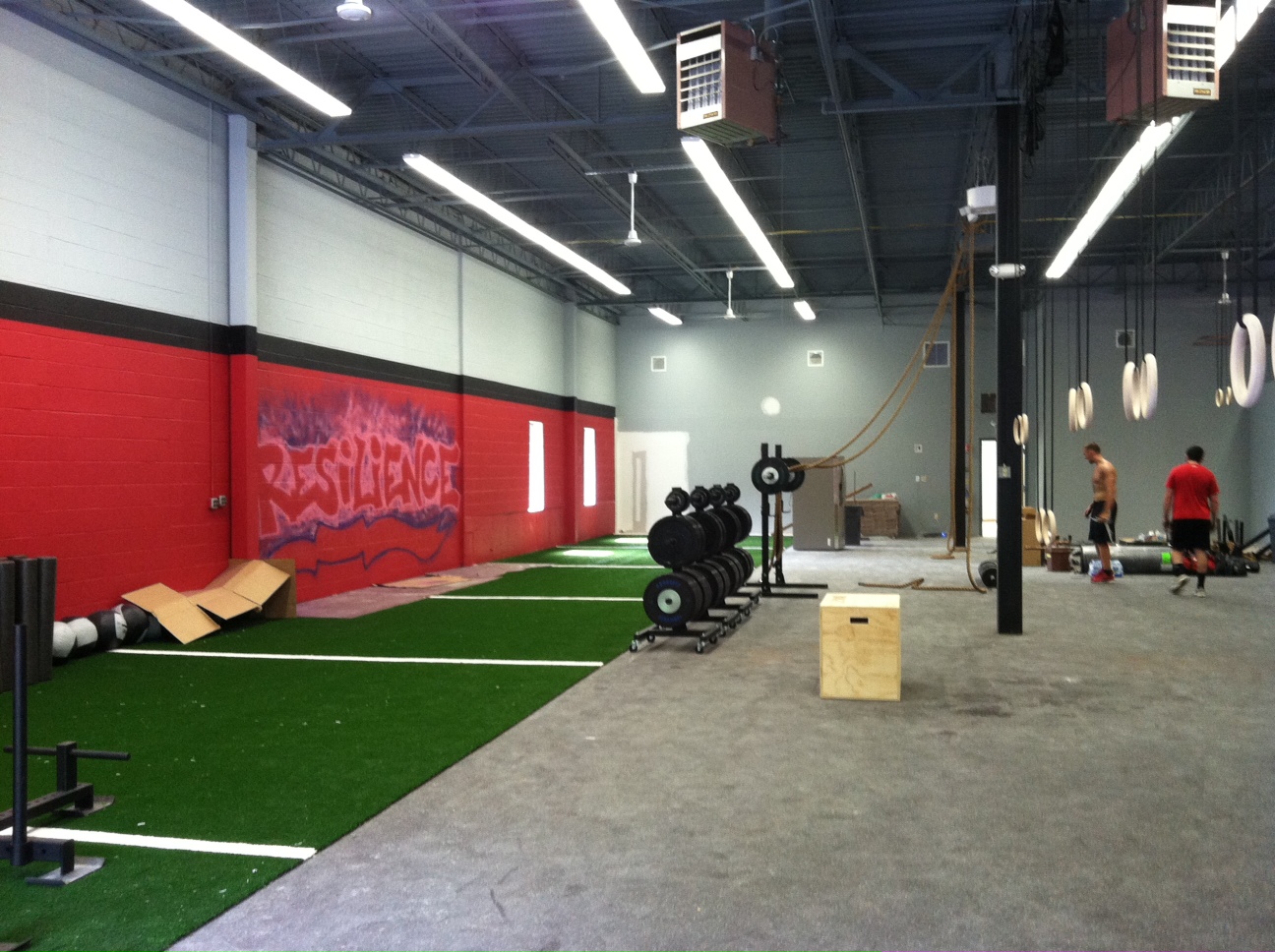
CrossFit Resilience

I've mentioned before that my former co-worker and good buddy Dan recently left my gym to go be a part of a new opportunity. He is the Director of Training at a new CrossFit gym opening up out in Hopkington, MA. I got my first chance to see CrossFit Resilience today and I loved it.


CFR isn't shaping up to be your average CrossFit gym. The coaches are top-notch and extremely knowledgeable and capable. They have competed at a high level in college athletics (basketball, wrestling, soccer and diving) as well as the strength sports (powerlifting, strongman, highland games). These well rounded athletes back up their ability with a great education and an awesome understanding of many different training practices.

The gym will be outfitted with all of the normal CrossFit toys: barbells, racks, a log, a safety squat bar, a fat bar, rings, bumpers, KB's, DB's, sleds, a yoke, atlas stones, tires, prowlers, sledge hammers, chains and bands. All the good shit.


We got in a great training session that day, too. Since it was a gorgeous day we went outside with farmers handles (135 pounds each) and did the 400 meter loop around the building, taking turns as each guy got tired. We then flipped the 500-ish pound tire, going with 4 flips per guy for about half the distance and then 10 flips per guy for the other half. We did another loop with the farmers walks and finished up with some wall balls: Dan did 100, I did 50 and Luis did 7.

It sounds like CFR is hoping to open their doors officially this coming Friday! I can't wait for my next trip out there. If you're in the area make sure to go check them out and lift something heavy!

Thursday, August 23, 2012

One Exercise To Rule Them All

People are always looking for the easy way out: a pill to lose fat, a belt to give them abs, shoes to make their knees stop hurting. Anytime someone can get something done faster, they want to be a part of it.


With that being said, people often ask what the best exercise they can do is. My go-to answer is the deadlift: you can load it heavily, its a lower-body lift that trains your whole body, and high-rep deads can be super metabolic. I usually say that it's my favorite exercise and, if I were forced to do only one exercise it would be the deadlift.

Truth be told, though, it may not be the single best exercise available. There are a few other lifts that can battle the deadlift for supremacy.

Snatch-Grip Deadlift from Deficit: This is a bastard of a lift. I love it and hate it at the very same time.


The gentleman in the video is using a pretty small deficit; you can stand on something as tall as 4-8 inches. The super-wide grip forces a large recruitment from your arms and upper back (big time grip challenge). The extra depth forces you to get into a much lower position, recruiting much more from your quads. Lastly, it's still a deadlift so your posterior chain is working overtime. It's really a total body lift that someone could do for a long time and still see results from it. The one thing I don't like about this exercise is the amount of mobility you need to do it properly. Almost none of my clients would be allowed to do this exercise.

Kettlebell Swing: There are several coaches out there who call this the "perfect exercise". When performed correctly, it could be.


Your whole body has to stay tense in order to perform it the right way, your hips have to explosively flex/extend, which produces a huge amount of power and it is super metabolic. The (generally) low weight of a kettlebell would also allow someone to perform a huge volume of swings. Yes, kettlebells can also get VERY heavy, which allows for a wide range of loading opportunities. Your entire posterior chain gets effectively worked during the swing, as does all of your core musculature. There's a reason why kettlebell people become so dogmatically pro-kettlebell!

Farmers Walks: This could read "loaded carries", but that offers up too many variants. When I say farmers walk I mean this one specifically.


I think that, if forced, this may take the cake as the only exercise I would do. Why?

  • It starts off with a deadlift!
  • The loading options are astronomical. It's very easy to achieve a supra-maximal deadlift while doing this. My own personal best deadlift is 440 pounds, while my best farmers walk is 500 pounds (250 per hand).
  • The grip challenge is out of this world. As is the necessary involvement of your upper back musculature. The worst soreness I've ever had was in my traps after the 500 pound farmers walk.
  • Stu McGill calls the farmers walk a "walking plank". It forces you to stabilize every muscle in your body.
  • Every step you take becomes a single leg exercise.
  • Metabolic doesn't begin to describe how metabolic this exercise is. Do a set of heavy farmers and see if you're not gasping for air. 
It could possibly be the most complete exercise available to us. It's also easily done with any equipment available. Farmers handles, dumbbells, barbells, kettlebells, sandbags, children, buckets of water, Honda's; if you can hold it, you can carry it. 

Give some of these exercises a shot! Lift something heavy (and carry it somewhere!)


Monday, August 20, 2012

The Therapist - Trainer Divide

The Strength and Conditioning world has taken a turn for the better lately. There is more and more work being done by strength coaches that will help an athlete prevent injury or recover from an injury. Strength coaches are delving more and more into the world inhabited by Athletic Trainers (AT's) and Physical Therapists (PT's).

This has nothing to do with anything.
Currently, there are a few top-tier strength coaches that are doing quite well blending Strength and Conditioning and Pre/Re-hab work. Coaches like Eric CresseyMike Ranfone and Dean Somerset are more or less leading the way for this new "breed" of coach that understands the need to do more than just get hyooge and strong.

Athletic Trainers, I'm learning, are more and more open to new techniques and research. They are moving beyond taping, ice and e-stim as a way to keep athletes healthy. More and more they are paying attention to things like the Functional Movement Screen and the work of Dr. Stuart McGill. There are also many more Athletic Trainers who are picking up on the benefits of soft-tissue work; ART, Graston and Trigger Point Therapy (to name a few).

Now, we come to Physical Therapists. Because their card starts with "Dr." everybody assumes they know everything about everything. With a few notable exceptions like Dr. McGillMike Reinold and Kelly Starrett it is getting pretty hard to find a PT who will think outside of the box.

Maybe I notice it more because of the people that I work with (general population clients), but anytime a client/friend of mine goes to see a PT about something, they come back with the same damn treatment sheet. Everybody is given a pre-written print-out with a list of exercises and demonstrations on them. Then they go back into the office for some e-stim or ultrasound and they do the exercises with a PT. 6 weeks later, problem solved!

I doubt it.

What makes any health professional think that every similar case can be solved the same way? Can every ACL tear really be fixed with the same print out? Why is it that more PT's don't take a patient-by-patient approach? I have a sneaking suspicion it has to do with their connection to the health care/insurance system. Due to their fear of losing all the income generated by Doctor referrals, PT's are too nervous to try any new modalities.

A recent conversation between myself and a PT friend regarding an athlete of mine sparked these thoughts. This particular athlete puts in a ton of miles running every week, in addition to my weight training program. She had been having some general anterior knee pain post-run and asked us (individually) about it. My suggestion was to ice, tone down her mileage and lighten the load a bit during her knee-dominant lower-body exercises (squats, lunges, etc). The PT's suggestion? Stop squatting, or stop squatting with a full range of motion. Without ever having seen her squat (I taught her) he automatically assumed it was the squat causing the problem. He also did this without reading the plethora of recent research which shows that partial range of motion squats exert more stress on the anterior portion of the knee capsule than full range squats which increase capsular stabilization at end-range. While I feel that this friend is an exceptional PT, he still tends to follow the dogmatic principles of a traditional therapist.


Clearly, PT's are a necessity. They do lot's of good work that other health professionals can't do. I, by no means, intend to belittle their profession. But if you are an athlete, a weight lifter or an active individual and need to go see a PT please make sure you do your homework. They are not all cut from the same cloth, and you need to make sure yours has views that fall in line with your own goals.

Take care. Go lift some heavy shit!

Friday, August 17, 2012

My Lesson in Humility

hu·mil·i·ty: nounthe quality or condition of being humblemodest opinion or estimate of one's own importance, rank, etc.


I'm a pretty good athlete. I work my ass off, and there's not a lot of sports I am awful at. However, I guess overall I'm pretty average. I honestly forget that though, because in my own little world I can always hold my own and be competitive. Team sports allow you to help rely on your teammates to push through and get a win. Today I was reminded, however, what a difference there is between elite level athletes and bums like me.

One of my co-workers at the gym used to run at Wright State in Ohio (a Division 1 school). She has been following my programming and diet plan for about 7 weeks now and has seen some ridiculous results. As of her last body comp test she had gained 4 pounds and lost about 2% bodyfat. Not only that, but her squat had gone from 95 pounds for 5 reps to 150 for 5 reps. Thats a pretty significant increase. (Yes, some of this can be accounted for because of her training age, but regardless it's a huge increase.)

This has been happening in conjuncture with another athlete doing some of my programming; another co-worker is going to the Olympic combine for bobsled/skeleton in a few weeks and her results have been ridiculous too. This other co-worker played softball at Boston University (another D1 athlete).

To be honest, I spent quite a bit of time thinking that I was just that good. Until today.

Kelsi is training for a half-marathon, and her workout for today called for 8 800 meter runs paced under 3:20 seconds. That equals out to running a mile in 6:40, which is the pace she wants to keep up during her race. That's pretty fast. She was looking for some company so Luis and I decided it was worthwhile to join her. My stupid ass was (obviously) talking a bunch of shit about how I thought I could beat her in a 400 and would be able to do at least two of her 800's with her.

Well, I had to stop and puke after the first 400 meters.


It felt like the fastest 400 I've ever run. I can play volleyball all damn day and feel ok, but I puked after like 70 seconds of running. It was a weird pace for me; not a jog but not a sprint. Somewhere uncomfortably in-between. Luis finished the first 800 with her and then we continued on by doing magic miles (sprint the straights, walk the curves) while Kelsi continued with her regularly scheduled programming.

As we walked we would watch her run, and holy shit. That girl can move. I finally realized that the reason she and our other co-worker were crushing their programs had much less to do with me and much more to do with their natural ability. They are elite athletes. Division 1 athletes are very high in terms of what they are capable of. Seeing her crush her runs (faster than she had planned, while on "trash" legs) was a very very cool thing to see. Any time you get to see a high-level athlete do what they are great at, it's a cool experience.

It's also very humbling and a great way to remind yourself how average you are. It also serves to remind me how much harder I have to work. Nothing wrong with that, I've never been afraid of a little hard work.

Thanks for reading! Go do something awesome today.

Wednesday, August 8, 2012

Healthy Recipes for an Apex Predator

I often hear people talk about how they want to eat healthy but don't know how to cook, or what to cook. Today I thought I'd share some of my favorite recipes that are nutritious, delicious, quick and easy. It's important for people to remember that eating well doesn't require everything to be bland and tasteless; food that is good for you should taste good too!


Breakfast-on-the-go!
If you're in a hurry in the morning, try this great breakfast!
- Take 6 eggs and hardboil them. Take them with you and eat them. Garnish with salt and pepper or hot sauce. Enjoy!

Breakfast at home!
If you've got the time to enjoy a leisurely breakfast at home, I envy you. Try this awesome meal!
- Take 4-6 strips of uncured bacon and cook them to your desired crispiness. Place these on a plate.
- Take 6 whole eggs and cook them in your preferred style (scrambled, over easy, sunny side up, etc). 
- Enjoy!

Lunch at the office!
Everybody is busy at work and has little time for lunch. Here is an easy lunch you don't even have to cook!
- 1 package (12 oz) of Trader Joe's Balsamic Vinegar and Rosemary chicken breasts cut into chunks
- 1 package of garlic hummus
- Cover pieces of chicken in hummus. Consume!
- 1 cup organic blueberries. Enjoy!

Dinner time!
Nobody likes spending a huge amount of time making dinner when they get home after a long day of work; here's a meal that will be done in 15 minutes!
- 8-12 oz of grassfed beef or free-range chicken breast
- 1 cup of white rice
- guacamole (homemade or purchased)
- Salsa (homemade or purchased; just not that Tostito's shit)
- Grill the steak or chicken, marinate as you see fit
- Cook the rice
- Mix them together. Dump guac and salsa on top
- Enjoy!

Snack time!!
Everybody gets hungry between meals, so here are some quick and easy snack ideas that will hold you over for a while.
- 1 cup full-fat greek yogurt
- cup of mixed berries
- mix and enjoy!

- 1 scoop of protein powder mixed with 12 oz of organic whole milk or raw milk
- 2-3 tablespoons of almond butter

- 1/2 - 1 lb grassfed burger patty
- 1 slice of cheese
- 2-3 slices of bacon
- few dollops of guacamole
- melt the cheese onto the burger and put the bacon on top. Plop the guac on top of that and enjoy!


Hopefully you took this post with a little bit of humor. Not the recipes, though; those are serious. I eat those things on a weekly basis. The point that I hoped to make with this post was that eating healthy foods is really pretty damned simple. Eat real, whole foods and limit the crap you take in. Keep your carbs around your workouts and at night and eat plenty of good fats. I am obviously not a dietician, but give one of these meals a shot and let me know what you think!

Go forth and lift heavy shit!

Thursday, August 2, 2012

Act Like an Adult

The last several weeks at the gym have been super busy for me. Several of the trainers left and as a result I ended up with schedule that was Nuts-to-Butts, to the tune of about forty sessions per week. This is more than double what I usually do during the school year.


My sessions start at 6 a.m. and end at 8 p.m. Two nights a week I then go to volleyball practice which gets over at 11. In bed by midnight and then back up at 4:45 the next morning for work. This doesn't leave a lot of time for what we call "sleep". Imagine my dismay this morning when each of my clients at 6, 7 and 8 all strolled in 20 minutes late as if it was no big deal.

Are you shitting me?

These are adults, we are talking about. Not 17 year old high schoolers. Adults. With jobs and families and responsibilities. People who are paying approximately $90 to spend an hour with me, just sauntering in like it's no big deal. I get it, it's tough getting out of bed so early in the morning. You know how I know? Because I have to wake up early for your session too.

My client at 6 this morning actually told me that he was late because he was so tired from his day on Tuesday. His day off from work. No big deal, bro. I was pretty tired too, but I managed to get to the gym at 5:30, so that I could be prepared for your session that you apparently don't give a shit about.

Showing up late for a session with me expresses the feeling that you don't give a damn about the importance of my time. That you don't place a high priority on my work or our results. And that's what it comes down to, right? Results? As my client, you expect certain results out of me. As the trainer, I expect a certain level of hard-work from you. Given the constraints of our schedule (1 hour each time, 2-3 times per week) I am able to figure out what results are realistic and in what time frame.

When you start showing up late on a consistent basis, I can no longer consider those results viable. In fact, it makes it really tough to even plan workouts for you. You already move like a turd, so I'm not going to compromise on your mobility and movement drills, so we are going to get in less exercise. Less exercise means fewer results, which then makes me look like a shitbum. And you know what? I'm not a shitbum.


Clients, please just show up on time, act like an adult. No one is forcing you to be there. You're with me because you want results; now give me the opportunity to get them.

Have a good day and go lift something heavy!

Wednesday, August 1, 2012

Has Hell Frozen Over?

Yesterday was a big day for me. I often preach about getting out of your comfort zone, so yesterday I went ahead and did something that would get my card pulled in the strength world.


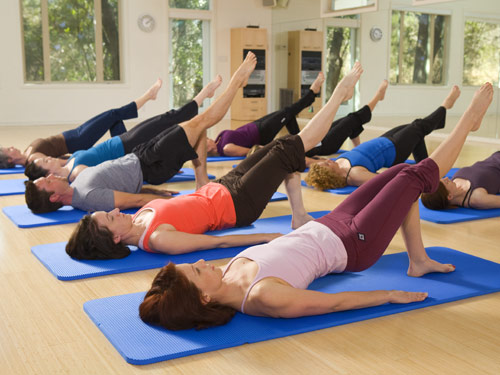
I did a Pilates class!

Thankfully I did it with Tony Gentilcore, which helps my argument a little bit. Regardless, it's something that I've never done before and needed to try. Why did I need to try it? So that I could understand it better. Like Bruce Lee said "Adapt what is useful, reject what is useless, and add what is specifically your own.”  I believe that I can learn from almost any situation, and Pilates is included in that. 

(Note: here is Tony's breakdown of the class.)

Admittedly, I was skeptical going into this. My boss asked me if TG had ever done Pilates and if he would be interested in trying it out. I emailed him and we got things rolling. I chose Shelley as our instructor since she and I have always had a good relationship and I've gotten a pretty good sense of her style from our conversations.

We met up yesterday and, in a totally bromantic coincidence, Tony and I were dressed nearly identically. After a brief history of Pilates from Shelley, we headed into the group exercise room for our lesson. Our session was mat-based because Shelley felt the reformers we had wouldn't quite do it for us. 

I was immediately humbled by our experience. A lot of Pilates is based around isometric contractions, which is something I don't often do. On top of that, we were doing what basically amounted to an isometric crunch. It didn't stop there though, it got harder in ways I wasn't really expecting. Tony talks about this in his blog too, but the breathing was the hardest thing for me. Absolutely everything in strength training teaches you to brace your core. Push out against your weight belt, fill up your belly, get tight. These are some common cues to give people when they are lifting. Instead, it was draw in your belly button and breathe. Huh? Really? How the hell am I supposed to do that? I instinctively felt myself brace during every movement we had to do, and had to really think about breathing the way we were told. 

I'm not going to lie: it was tough. By the end we were both pretty ragged. I'm sure one of the reasons it was so tough for us was because we were both able to follow Shelley's cues and activate the right muscles at the right time. (I'm writing this the day after, and I am acutely aware of my glute medius).  At no point did I think "this is a joke", rather I kept thinking about the ways which Pilates could help some of my clients. A surprising number of the cues share some similarities and I couldn't help but picture the strength training correlate to some of the cues she gave us. 


Yup, there were glute bridges involved. As were pushups, and planks and lunges. My training sessions also involve those exercises...weird.

As state before, this Pilates session really made me think about activating particular muscles. Shelley did a great job explaining what she wanted from us and did an even better job getting it every time. She was hands-on and would guide us into doing what needed to get done. Movements were either regressed (for Tony) or progressed very quickly and everything was challenging. 

I personally wasn't thrilled with the amount of time spent in a crunch position since I feel most people over-train their rectus abdominus anyway. It was evened out with some time spent in the plank position, though. Also, there wasn't really a way for us to challenge our backs, something that I think a lot of people need work on. Clearly there are ways to remedy this on a reformer, but for now I can only speak on what I experienced.

Would I do it again? Sure I would. It's another tool in the toolbox. It could be a good recovery day activity that would awaken/activate muscles all over your body, while simultaneously providing some static stretch to your body. I would also recommend it to a client who needed a day of activation in order to "learn" their body a little more. Learning how to engage your core and keep a stable pelvis is one of the keys to getting strong and I can see how Pilates would be able to help teach/reinforce that motion. 

Pretty much how we ended our Pilates session
I'm certainly not going to stop lifting heavy shit and start buying slim fight LuLuLemon pants, but I wouldn't be opposed to doing Pilates with Shelley every once in a while. Learn what is useful and reject what isn't, right?

Step out of your comfort zone today. See what you can learn!